
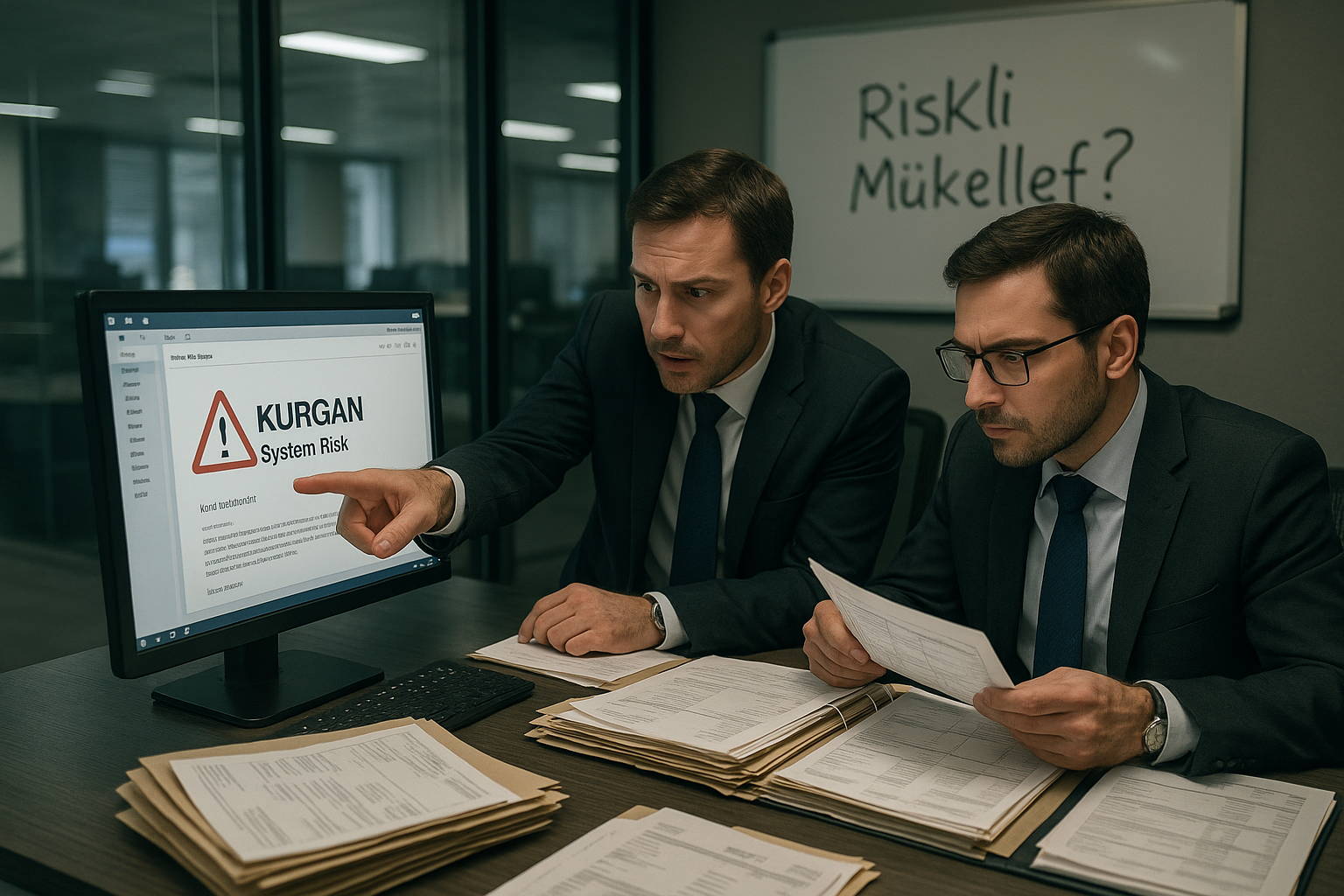
As of October 1, 2025, the era of "we did not know the document was forged" has effectively come to an end in Türkiye. Tax authorities during audits will now proceed from the presumption that the document was used knowingly.
📌 What Has Changed?
The KURGAN system (Kuruluş Gözetimli Analiz Sistemi) has been introduced—an AI module that analyzes company transactions and flags risks of sham document circulation.
Based on KURGAN, companies have begun receiving notices regarding the "risky use of documents," demanding evidence of the economic reality of their transactions.
If a document is deemed fraudulent:
• previously: disallowance of VAT deductions and a 1x tax penalty,
• now: disallowance of deductions, a 3x tax penalty, and criminal prosecution (3 to 8 years in prison).
📫 What Are Companies Receiving?
The letters from the tax authority list "questionable" transactions and request:
• payment documents,
• waybills and consignment notes,
• evidence of goods receipt and internal usage.
In essence, this serves as an "early warning" of audit risk.
🔗 MASAK and Compliance
A question has arisen: are accountants and Certified Public Accountants (YMM) required to submit a Suspicious Transaction Report (Şüpheli İşlem Bildirimi) to MASAK?
Answer: No, KURGAN notices by themselves do not trigger a requirement to file with MASAK, but they do establish an obligation to substantiate transactions with documentation.
⚠️ Risks for Business
• Infringement on the presumption of innocence: companies are placed on a "grey list" without trial or comprehensive proceedings.
• Reputational damage: even a temporary "riskli mükellef" (risky taxpayer) status causes counterparties to terminate business relationships.
• Liquidity threats: denied VAT deductions combined with threefold penalties can paralyze operating cash flows.
📊 Client Case Studies (In Practice)
1️⃣ Electronics Importer (Ankara)
The client received a KURGAN notice detailing "questionable" purchases from a local distributor. After assembling a complete file of waybills, bank payment confirmations, and warehouse records, we successfully proved the commercial reality of the transaction and avoided recharacterization.
2️⃣ Construction Company (İzmir)
The client's counterparty was classified as "riskli." The accounting department had to urgently draft explanations and review the entire block of incoming invoices. Our legal and tax support minimized the exposure and preserved the VAT deductions.
3️⃣ Furniture Manufacturer (Kayseri)
The company was flagged as "suspicious" due to discrepancies in customs tariff (HS) codes. Following the adjustment of returns and submission of an explanatory memorandum, the file was closed without adverse consequences.
💡 Recommendations for Businesses
- Perform an express audit of all suppliers: verify whether any have been assigned "riskli" status.
- Implement robust internal document controls: retain payment orders, delivery notes, and warehouse acceptance certificates.
- Prepare template rapid responses for Tax Inspection Board (VDK) inquiry letters.
- Engage through qualified tax advisors; any error in formal responses compounds legal exposure.
- Treat KURGAN not as routine bureaucracy, but as a direct trigger for comprehensive compliance.
👉 Conclusion:
KURGAN is not merely a new AI tool for the tax administration. It marks a paradigm shift in tax control:
• the taxpayer must demonstrate good faith in advance,
• high-risk commercial ties can cost a company not only financial penalties, but its market reputation as well.
#Turkey #business #compliance #tax #KURGAN