
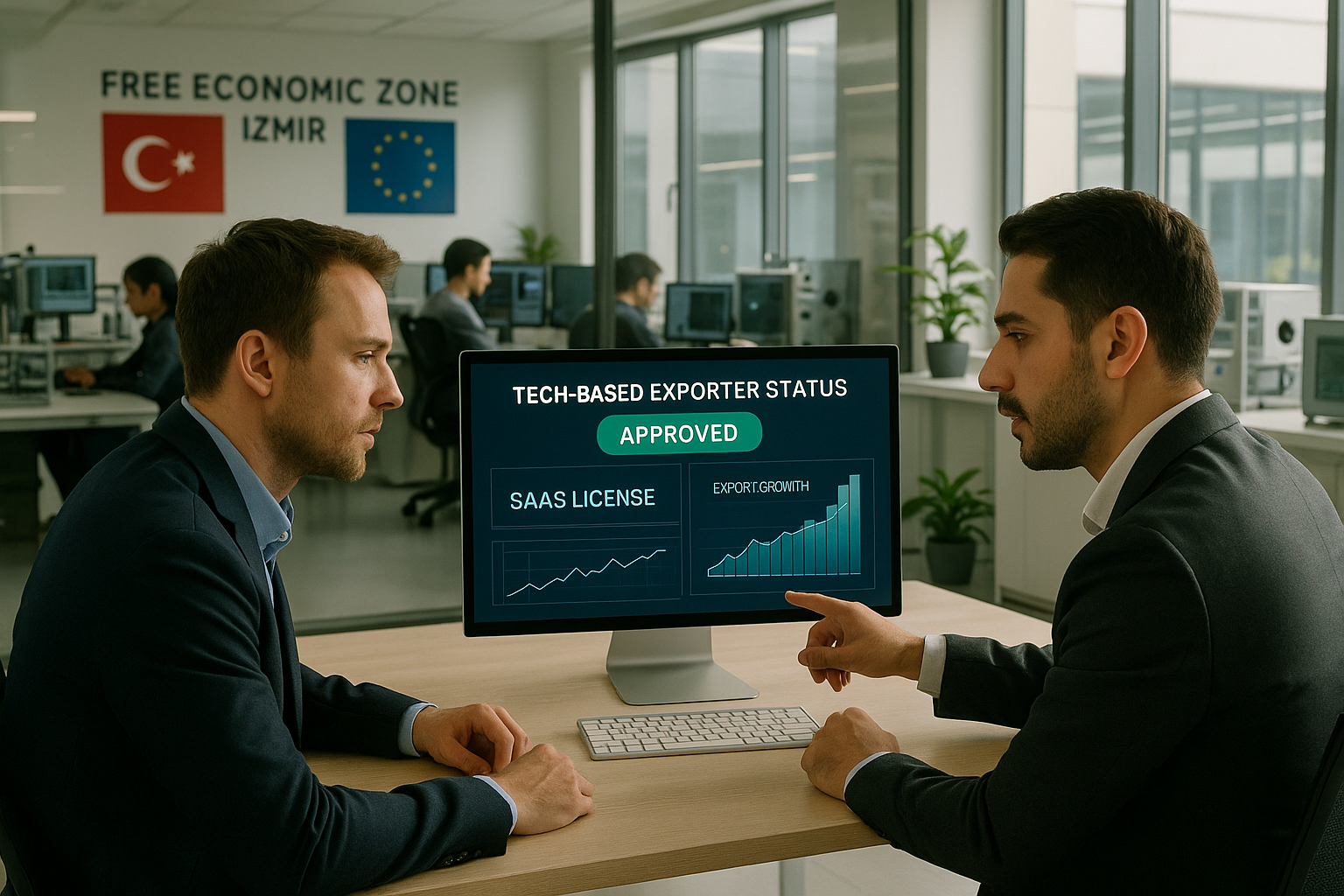
Free trade zones (FTZs) in Türkiye have become the core of a new industrial model for high-value-added exports. Against the backdrop of currency risks and inflation, FTZs provide companies with precisely what is lacking in the broader economy: stability, flexibility, and global competitiveness.
1️⃣ High-Tech Exports Are Growing
As of August 2025, the share of medium-high and high-tech goods in exports from FTZs reached 52.1%.
The average export price here is 30–40% higher than the national average, reflecting the concentration of innovative manufacturing in the zones: electronics, mechatronics, pharmaceuticals, and IT.
2️⃣ Record-Breaking Indicators in 2025
August was the best month in the history of FTZs:
• Exports: $1.045 billion,
• Trade surplus: $448 million (a new record),
• January–August: export growth of 4.1% (from $7.9 billion to $8.3 billion),
• Trade volume exceeded $18.4 billion (+2.8%),
• FTZs delivered a net surplus of $2.91 billion to the economy—a critical contribution to the balance of payments.
3️⃣ Geography and Structure
There are 19 FTZs operating in Türkiye, including:
• 3 in Istanbul,
• 3 in Izmir,
• 2 in Kocaeli,
• others in Bursa, Antalya, Mersin, Samsun, Trabzon, and Gaziantep.
They host 2,900 companies, 506 of which are foreign investors.
The manufacturing sector accounts for 44% of all residents, employing 92,810 people, with productivity steadily rising due to automation.
📂 RelocationTR Case Studies
🔹 Case 1. Germany → Türkiye: Medical Equipment (Izmir)
Objective: Establish an export hub for shipments to the EU.
Solution: Registration in the Izmir FTZ with corporate income tax exemption and accelerated VAT refunds.
Results:
• +36% export growth over 8 months.
• –22% logistics costs (maritime shipping routes).
• Awarded “Tech-Based Exporter” status; launched an R&D center.
🔹 Case 2. Kazakhstan → Türkiye: Agro-Logistics and Processing (Mersin)
Objective: Establish an export and logistics hub featuring agricultural processing and deliveries to the Middle East.
Solution: Company incorporation in the Mersin FTZ, securing customs duty exemptions and machinery equipment incentives.
Results:
• $5.2 million in investments,
• Expansion into the markets of Kuwait, Jordan, and the UAE,
• Container turnaround time reduced from 26 to 11 days,
• Full ROI within 18 months.
💬 Client Feedback:
“We expected tax advantages, but we gained far more—direct access to international logistics without bureaucratic hurdles.”
🔹 Case 3. Netherlands → Türkiye: IT Development and SaaS (Istanbul)
Objective: Localize R&D and optimize payroll costs while maintaining European engineering quality.
Solution: Office registration in an Istanbul FTZ with a software export license.
Results:
• 38% reduction in payroll costs,
• Eligibility for software export tax incentives,
• 100% hard-currency revenue,
• Profit margin increase from 18% to 29% within 12 months.
💬 Feedback:
“Türkiye proved to be an outstanding compromise: a European legal environment combined with Asian dynamism.”
4️⃣ What This Means for Business
Free zones in Türkiye are becoming accelerated growth platforms for three types of companies:
- Export-oriented manufacturers: a cost-effective alternative to the EU.
- Integrators and logistics operators: direct access to ports and transit corridors.
- Technology companies: tax neutrality and services exports.
5️⃣ For foreign investors, this is an opportunity to enter the Turkish market without domestic jurisdictional risks and currency barriers.
📍 RelocationTR supports FTZ projects end-to-end, from site selection and incorporation to full regulatory compliance and obtaining export incentive statuses.